


Fundamentals
What off-page SEO, backlinks and link building are, in plain terms, and the first questions every beginner asks.
What is off-page SEO?
Off-page SEO is everything that happens away from your own website and still changes how search engines and AI assistants rank and describe it. Links are the largest part, but not the only one.

On-page vs off-page SEO: what is the difference?
On-page SEO is the work you do on your own pages, such as copy, titles and internal links. Off-page SEO is what other sites and people do, such as linking to you and mentioning your brand. You control the first and can only influence the second.

What is link building?
Link building is the work of getting other websites to link to yours. It works because search engines read links as a sign of trust and as a description of the page. The methods range from free requests to paid placements that break Google's policy.

Link equity and link juice: what passes through a link
Link equity, also called link juice, is the ranking value a link passes from one page to another. It comes from the PageRank model, where each page shares its score among its links. Here is what passes it, what blocks it and how it moves inside your site.

What is a backlink?
A backlink is a link on another website that points to a page on yours. Search engines read it as a vote and as a description of your page, but how much it counts depends on who links, where the link sits and what it says.

Referring domains vs backlinks: which number matters
A backlink is one link to your site. A referring domain is one website that links to you, however many times. Referring domains are the better number to track, because the first link from a new site says more than the fiftieth from the same one.

Link attributes: nofollow, sponsored and ugc
Nofollow, sponsored and ugc are labels a site adds to a link to tell search engines how to treat it. Google has read all three as hints since 2019, so a labelled link may or may not count.

Do backlinks still matter?
Yes, but less than they did. Google says links are no longer a top-three factor, and Ahrefs' 2025 study still finds a 0.255 correlation between referring domains and rankings. Both statements are true at once.

Anchor text
Anchor text is the clickable wording of a link. Google uses it as a core relevance signal, and heavy keyword anchors are also the classic sign of link spam. No safe ratio of anchor types has a primary source.

How to get backlinks for free
You get backlinks without paying for them by recovering links you already earned, asking sites that mention you, and using relationships you already have with suppliers, partners and customers. Free means no fee for the placement. It still costs time.
Types of backlinks: which ones carry weight
Backlinks differ by how they were placed, where they sit on the page and which attribute they carry. Editorial links inside the main content count most. Sitewide, bulk directory and user-generated links count least.

White hat, grey hat and black hat link building explained
White hat link building stays inside Google's spam policies, black hat breaks them openly or breaks the law, and grey hat SEO is the wide middle where most paid placements sit. Here is how the three labels map to our R1 to R5 risk scale.
How search engines use links
How Google and other engines discover, weigh, discount and ignore links, based on patents, court documents, the 2024 leak and official statements.
How search engines evaluate links
Not every link counts the same, and many count for nothing. Search engines weigh the authority of the linking site, how relevant it is, the anchor text and where the link sits on the page.

PageRank explained: does Google still use it?
PageRank is Google's original system for scoring pages by the links that point to them. Google still uses it. Its ranking systems guide lists PageRank, and a 2025 court exhibit describes the modern version as distance from a known good source.
Link relevance vs authority: which matters more?
Neither wins outright. Authority is the better confirmed signal, because court evidence ties PageRank to Google's quality score. Relevance decides whether a link makes sense at all. The working rule is to require relevance first and then choose the strongest source among relevant sites.

Sitewide, footer and widget links: are they a problem?
Sitewide, footer and widget links are not a problem in themselves. They become one when they are distributed widely, carry keyword anchors or are paid for. Google's spam policies name both footer and widget links, and most such links are discounted even when they break no rule.

What the Google leak and the antitrust documents revealed about links
Two sets of documents changed what we know about links in Google. Court evidence from the US antitrust case confirms how links are used. The May 2024 leak shows which link data Google stores, but not how much any of it counts.

Do links from pages with no traffic count?
Nobody outside Google knows for certain. The 2024 leak shows Google grading links by the index tier of the linking page, and one analyst argues that pages nobody clicks sit in the lowest tier. That is an inference. An Ahrefs study found no clear advantage for links from pages with traffic.

TrustRank and seed sites: how trust spreads through links
TrustRank is a 2004 research method that starts from a small set of hand-checked good sites and passes trust outward through links, weaker with every hop. Google has confirmed that its own PageRank now measures distance from a known good source. Which sites are seeds is not public.

Link position on the page: the reasonable surfer and first link priority
Where a link sits on a page changes its likely value. Google's reasonable surfer patents describe weighting links by how likely a reader is to click them, so links in the main text count for more than footer links. First link priority is an old test result that Google has never confirmed.

Link freshness and link age: do old links lose value?
Google records when a link first appeared, when it was last seen and whether it was deleted, so link age is tracked. No public source says old links fade simply because they are old. The larger risk is that links disappear, and that a profile stops gaining new ones.

Do 301 redirects and canonical tags pass link equity?
Yes. Google treats a permanent redirect and a rel=canonical tag as strong signals that consolidate links onto the target URL, and Google's Gary Illyes is reported to have said in 2016 that 30x redirects no longer lose PageRank. A redirect to an unrelated page can pass nothing.

How Bing, Yandex, Baidu and Naver treat links
Links matter in every major search engine except Naver, but the evidence is uneven. Bing publishes guidelines, Yandex leaked its ranking factors in 2023, and Baidu and Naver have little recent primary documentation.
Metrics and analysis
Reading backlink data: third-party authority metrics, profile analysis, gap analysis, audits and the limits of each tool.

Domain Authority vs Domain Rating: what authority metrics measure
Domain Rating, Domain Authority, Authority Score and Trust Flow are third-party estimates of how strong a site's backlinks are. Google uses none of them. They are useful for a first sort and easy to fake.

How to check the backlinks of any website
For your own site, start with the free Links report in Google Search Console. For a competitor, use a backlink tool such as Ahrefs, Semrush, Moz or Majestic. Every source shows a sample, so here is what each one gives you and how to read it.

Link gap analysis: comparing your profile with the sites that rank
A link gap analysis compares your backlink profile with the sites and pages that outrank you. It tells you which domains to approach first and roughly how many referring domains a keyword will cost you.

What a natural backlink profile looks like
A natural backlink profile is mixed. Most anchors are brand names, URLs and titles, most links point to the homepage and to informational pages, followed and nofollow links sit side by side, and growth is uneven. No fixed ratio defines it, so the test is comparison with similar sites.

URL Rating and Page Authority: page-level link metrics
URL Rating from Ahrefs and Page Authority from Moz score the link strength of a single page, not a whole site. They matter more than domain metrics when you judge the exact page a link will sit on, or the pages you compete with for one keyword.

How to increase Domain Rating or Domain Authority, and whether you should
Domain Rating and Domain Authority rise when more good sites link to you with followed links. That is the only honest way to raise them. They are third-party estimates, not Google metrics, so the score should follow real link earning and never be the target.

Why Ahrefs, Semrush, Moz and Majestic show different backlink numbers
Each backlink tool runs its own crawler, keeps its own index and applies its own rules for what counts as a live link. None sees the whole web, so the same site gets different totals in every tool. Pick one tool for comparisons and use a second only to widen coverage.

How long do backlinks last? Link rot and survival rates
Most backlinks do not last for ever. Ahrefs found that about two thirds of links had disappeared over roughly nine years, and Linkody's 2026 data shows 63% of monitored links about one year old were still live. Pages get deleted, sites close and links get edited out.

How to track backlinks and measure what they do
Track every link you build for live status, indexation, attribute and anchor changes, and loss. Check weekly for the first three months, then monthly, and measure impact in batches against pages that received no links.

Backlink audit and toxic links: what to check and when to disavow
A backlink audit sorts the links pointing at your site into ones you built, ones that appeared on their own and ones you have lost. "Toxic backlinks" is a tool label, not a Google signal, and the disavow tool is only worth using in a narrow set of cases.

How link metrics and traffic numbers get faked
Sellers raise Domain Rating with links that exploit the formula, such as expired domain redirects. Traffic estimates are inflated with junk keywords and bots. You spot both by checking what a site ranks for, where its links come from and whether the numbers agree.
Strategy and planning
Deciding how many links, to which pages, with which anchors, at what pace and risk level, for one site or many.

Your first 100 links: a plan for a new site
Start with the links that cost little and carry no risk, such as listings, partners and reclaimed mentions. Add assets and outreach next, then PR. Leave paid placements until last, once you can judge a publisher.
How many backlinks do you need to rank?
There is no universal number. The count that matters is the gap in referring domains between your page and the pages that already rank for the same search. Here is how to measure that gap and turn it into a monthly target.

How long does link building take to work?
A first link can go live in days or take three months, depending on the tactic. Most SEOs then expect a ranking effect within one to three months. No published study measures the delay precisely, so treat every timeline as an estimate.

Link building mistakes: ten errors the evidence points to
The most expensive link building mistakes are buying from the low-quality pool, paying by Domain Rating, forcing exact-match anchors and never checking that links are indexed and still live. Each mistake below is tied to a study, a survey or Google's own wording.

Link velocity: how fast is too fast?
Link velocity is the rate at which a site gains new referring domains. Google says speed alone is not a rule, and no safe number has a primary source. What gets caught is a burst of similar keyword anchors from weak sites.

How to plan anchor text across a link profile
Plan anchor text for the whole profile, not link by link. Record the anchors each target page already has, compare them with the pages that rank, set a band for each anchor type per page, and give writers two or three variants. Google publishes no safe ratio, so every percentage is a rule of thumb.

Which pages need links: homepage, category or content?
Most natural links go to homepages and informational pages, while commercial pages attract few. The standard approach is to earn links where they come easily, pass the benefit on with internal links, and add direct links to commercial pages with care.

Changing domain: how to keep your backlinks through a migration
Your backlinks keep pointing at the old domain after a move. Their value reaches the new site only through permanent page-to-page redirects, which Google says to keep for generally at least one year. Search Console's Change of Address tool forwards signals for 180 days.

Link building strategy: how to build a plan step by step
A link building strategy is a written plan that sets the goal, the gap to competitors, the pages that need links, the tactics allowed at your risk level, the budget, the quality checks and the report. This lesson builds one in seven steps and ends with a one-page template.

International link building: prices, publishers and domain structure
To rank in another country you need links from sites in that country and language. Prices differ by a factor of ten or more between markets, publisher pools differ in size and habits, and your domain structure decides how much authority each market starts with.

Enterprise link building: directing and keeping link equity at scale
A large brand already earns links without trying. Enterprise link building is mostly about keeping that equity and pointing it at the pages that make money, through redirects, reclamation, internal links and governance, with far less tolerance for paid link risk than a small site has.

Tiered link building: what it is, what it costs and how it gets caught
Tiered link building means building links to the pages that link to you. The clean version is promoting coverage you earned. The spam version points automated links at paid placements, falls under Google's link spam policy, and we rate the evidence that it still works as low.
Outreach and earning links
Prospecting, contacting and persuading site owners, plus the earned link sources that do not have their own tactic page.

Link outreach emails: reply rate data, templates and deliverability
BuzzStream's platform data puts cold reply rates at 0.85% and 1.06% in two samples and 3.59% in a third. Short, relevant pitches to small lists do better, one follow-up is normal, and none of it works if the email lands in spam.

Link prospecting: how to find sites worth pitching
Link prospecting means building a list of sites that have a reason to link to you. Start with sites that already link to your competitors, add pages found with search operators, then remove anything that fails a quick quality check before you look for a contact.

How to find the right contact and verify an email address
Pitch the person who can change the page, usually the author or editor, not a generic inbox. Look for the address on the site first, use an email finder second, and run every address through a verifier before sending so that bounces stay low.

How a link building campaign runs, from prospect list to live link
A link building campaign runs in a fixed order. Set the goal and target pages, build and vet a prospect list, find contacts, pitch and follow up, agree terms, check the live link and track it. Each step has a number you can measure.

What to do when a site asks for money for a link
A price in reply to outreach is normal in commercial niches. You have four choices. Offer something other than money, pay for a link labelled as sponsored, pay for an unlabelled link and accept the policy risk, or walk away. Decide by rule, not email by email.

AI in link building: what it can and cannot do
AI tools are useful for the research side of link building, such as ideas, data analysis and sorting prospects. They hurt results when they write and send pitches at volume or generate content only to hold a link. Keep a person in charge of anything a publisher or journalist will read.

Are .edu and .gov links more powerful?
Not because of the domain ending. No source shows Google giving .edu or .gov links a bonus. They are often strong because universities and public bodies are trusted and heavily linked. Real ones are earned through research, teaching, public data and partnerships, and are not for sale.

Podcast guesting for links and mentions
Yes, a podcast appearance usually earns a link from the episode's show notes, if the show publishes episodes on its own website. No reliable study measures how much those links help, so treat podcast guesting as a low-risk method for links and brand mentions, not a proven ranking tactic.
Digital PR
Earning links and mentions from journalists: campaign formats, ideation, pitching, measurement and what coverage is worth.

Digital PR vs link building vs traditional PR
Digital PR earns links and mentions by giving journalists a story. Link building places links by asking, swapping or paying. Traditional PR manages reputation and does not care about links. The three differ in who decides, what you get and how you measure it.

How to come up with digital PR ideas that journalists cover
A digital PR idea starts from what a journalist's readers care about, then works back to what your brand can credibly say and prove. Generate ideas from five sources, test each against three questions, and write the headline before you spend anything.
Data-led PR campaigns: finding, analysing and packaging original data
A data-led PR campaign turns a dataset into one clear finding, publishes it with a full method note and offers journalists cuts for their own region or beat. The method note matters as much as the headline, because journalists check where a number came from.

Reactive PR and newsjacking: process and response times
Reactive PR means giving journalists an expert comment or a small piece of data while a story is still live. It works when the preparation is done in advance, so a comment can be approved and sent within about one to three hours of the news breaking.

How to build a media list that is relevant
Build a media list from the story outwards. Find the journalists who covered the topic in the last 60 days, check each one by hand, split the list into segments with their own angle, and keep it small. Relevance, not size, decides the reply rate.

How to pitch journalists: what the survey data says they want
Journalists want a pitch that fits their beat, arrives by email, runs to a couple of hundred words and offers data, an expert or early access. Surveys of journalists and studies of millions of pitch emails agree on most of the detail, and it is set out here.

Do press releases build links?
Not directly. The copies a newswire places on partner sites are syndicated duplicates that should be counted as zero links. A press release builds links only when a journalist reads it and writes their own article, which usually takes a direct pitch as well.

Do syndicated links from news coverage count?
Nobody outside Google knows for certain. One 2025 test suggests syndicated copies of a news story can move rankings, while BuzzStream's guide holds that they carry little SEO value. The safe approach is to count each story once and report the copies on a separate line.

Measuring digital PR: links, mentions and commercial outcomes
Measure digital PR in three layers. Count unique linking domains and their quality, count mentions and AI visibility separately, then tie both to commercial results by comparing the pages you supported with pages you did not. Agree the definitions before the campaign starts.
Buying links and vendors
How the paid link market works: prices, inventory, vetting, briefs, agencies, packages and the ways buyers lose money.

How common is buying links? What the surveys show
Between a third and three quarters of SEOs say they pay for links, depending on who is asked and how, and more than nine in ten believe their competitors do. Nobody can measure it directly, because almost no paid link carries a label.

How to vet a publisher before you place a link
Vet a publisher on relevance, real organic traffic, what it ranks for, its own link profile and how freely it sells links. This page gives the criteria, a 100-point scorecard and a five-minute link farm check.

Seller lists and recycled inventory: why the same sites turn up everywhere
The same publishers appear in every vendor's list because few sites sell links, and those that do sell to everyone. They list on several marketplaces and are resold by agencies and middlemen. Here is how that happens and how to spot it.

Link seller scams: how buyers get cheated
Most link seller scams follow a few patterns. The seller does not control the site, the link changes after you pay, the metrics are faked, the page is hidden from Google, or the publication is a copy. Here is how to recognise each one and pay safely.

Cheap backlinks: what a $5 to $50 link really is
Cheap backlinks are rarely worth buying. At $5 to $50 the price is below what a site with real readers charges, so the link is usually automated, rented or on a network built to sell. Here is what each price buys and when cheap is fine.
Link building packages: what is in them and whether they are worth it
A link building package is a fixed number of links for a fixed price, usually defined by authority score. Public prices in October 2026 ran from about $60 a link to $20,000 a month. A package is worth it only if you can see and approve the sites.

Guest posts vs niche edits: which to buy
Buy a niche edit when an existing page already has traffic and links and you need a fast boost to one commercial page. Buy a guest post when you need control over the content and context. Neither is safer under Google's policy.

Paid placements on big news sites: what is really for sale
You can pay to appear on many large news sites, but what is sold is usually labelled sponsored content with a nofollow link, a paid contributor programme or a slot in a section Google treats separately. A hidden followed link in real editorial is rarely on offer.

How to write a placement brief
A placement brief is the one-page instruction to the writer and publisher for a single link. It fixes the article angle, the target page, the acceptable anchors, where the link sits and what gets checked when it goes live.

Backlink indexing: how to get links indexed and whether indexers work
A backlink counts only if Google has crawled and indexed the page it sits on. Start with clean methods such as internal links from the publisher. Indexer tools can prompt a crawl, but no independent 2026 test confirms the success rates vendors publish.
How to audit the links an agency or vendor delivers
Check every delivered link in three passes. Is the link live and as agreed, can Google see and index the page, and is the site one you would have chosen yourself? Audit every link for the first two months, then a sample of about 30%.
Link building cost in 2026: pricing by method, authority, niche and country
SEOs put the acceptable price of one quality link at about $509 on average in 2026. Paid guest posts average $295 direct, niche edits $179 and digital PR $1,250 to $1,500 per linking domain. Full price tables and budget models below.
How to buy backlinks safely: policy, risks and a checklist
Buying a followed backlink breaks Google's link spam policy, so no purchase is fully safe. You can cut the risk of wasted money and penalties by vetting the site yourself, paying the real price and checking the link after it goes live. Here is how buying works in practice.

How to choose a link building agency or white label partner
A link building agency is worth hiring when it places better links than you could for the same money, and when you can audit what it delivers. Here is when an agency makes sense, what to put in the contract, the red flags, the pricing models and how white label link building works.
Risk and penalties
Google link spam policy, detection, penalties, the disavow tool, attacks and the legal side of paid placements.

What counts as link spam under Google policy
Link building is not against Google's rules. Links created mainly to manipulate rankings are, and Google's spam policies list eleven examples, from paid links to forum signatures. Here is what the policy says, what it allows and where the grey areas sit.

Directories, social bookmarking, profile and comment links: do they still work?
Mass directory submissions, social bookmarks, profile links and blog comments no longer move rankings. Google names most of them in its link spam policy and treats user-generated links as not followed. A few curated versions still earn their place for other reasons.

How to disavow backlinks: file format and steps
To disavow backlinks you upload a plain text file, one URL or domain per line, through the disavow links tool in Google Search Console. Google says most sites never need it. Here are the exact file rules, the steps and the cases where it is worth doing.
Selling links on your own site: the risks for publishers
Selling followed links or unlabelled sponsored posts breaks Google's link spam policy and can bring a manual action for unnatural links from your site. Selling labelled advertising with a sponsored or nofollow attribute does not. Here is what publishers risk and how to sell safely.

Are paid links illegal? Advertising disclosure rules in the US, UK and EU
None of the US, UK or EU regulator pages we read bans paying for a link. What they regulate is paid content that readers cannot tell is advertising. This lesson sets out what the FTC, ASA, CMA and EU rules say. It is general information, not legal advice.

Google link spam updates: a timeline from Penguin to 2026
Google has moved from periodic link penalties (Penguin, 2012) to continuous, mostly silent neutralising of spam links by SpamBrain. There has been no named link spam update since December 2022. This page lists the dated events and explains what each changed.

How Google detects paid links
Google has not published its method. What is known is that a machine learning system called SpamBrain looks for sites that buy links and sites that sell them, that patterns across many links matter more than any single one, and that human reviewers and spam reports add a manual layer.

Link footprints: the patterns that expose a link scheme
A link footprint is a repeated pattern that shows a group of links or sites has one origin. Shared hosting and analytics IDs, identical site templates, the same outbound targets and matching anchors are the common ones. The link graph itself is the hardest footprint to hide.

Hacked and cloaked links: how to recognise them and why to avoid them
A hacked link is placed on a website without the owner's permission, which is a crime against that owner. A cloaked link is shown to one audience and hidden from another, often to cheat the buyer. Both are sold as ordinary placements. A few checks before you pay will catch most of them.

Google link penalties and recovery: manual actions, devaluation and the disavow tool
Google deals with bad links in two ways. A manual action is a penalty applied by a person and shown in Search Console. Algorithmic devaluation silently ignores the links. The diagnosis and the fix are different for each.

Site reputation abuse: Google's parasite SEO policy and the 2026 change in Europe
Site reputation abuse is Google's policy against third-party content placed on a strong website mainly to borrow its ranking signals. Since 30 August 2026 its manual actions no longer affect results shown to users in the European Economic Area. The policy itself has not been withdrawn.

Negative SEO and link attacks: how to spot one and respond
Negative SEO is an attempt to damage a competitor's rankings from outside. Spam link blasts are the best-known form and the least effective, because Google mostly ignores them. Fake link removal requests, review attacks and hacks do the real damage.
AI visibility and brand signals
Mentions, entities, reviews, communities and the off-page work that decides whether AI assistants name and cite a brand.
Brand mentions and citations
A brand mention is your name on another site, with or without a link. A citation is a listing of your business details in a directory. Both are off-page signals, and mentions are the factor that tracks AI visibility most closely.

Do social media links and social signals help SEO?
Links from social posts are real links, but almost all carry nofollow or ugc and pass little or no ranking credit. Google staff have said for years that likes and shares are not ranking signals. The value is indirect, and social pages are now sources that AI assistants cite.

GEO, AEO and LLMO: what the terms mean and where off-page work fits
Generative engine optimisation (GEO), answer engine optimisation (AEO) and LLM optimisation (LLMO) are three names for one job, which is getting a brand named and cited in AI answers. It differs from SEO in the goal and the unit of measurement, and most of the evidence points at off-page work.

Reddit for SEO and AI visibility: what works and what gets you banned
Reddit links pass little ranking credit, but Reddit threads rank widely and are among the pages AI assistants cite most. Open participation under a disclosed account is safe. Fake personas, bought accounts and vote manipulation get accounts and domains banned.

YouTube mentions and AI visibility
Mentions of a brand in YouTube titles, descriptions and transcripts were the strongest correlate of AI visibility in Ahrefs' December 2025 study. The link is a correlation with plausible reasons behind it. You earn the mentions by being covered in other people's videos.

How to get into third-party "best X" lists
You get into a "best X" list by finding the lists that search engines and AI assistants already retrieve for your category, then giving each editor a reason and the facts to include you. A few placements in lists that are cited beat many in lists nobody reads.

Reviews as an off-page signal: rankings and AI recommendations
Reviews on third-party platforms help local rankings on current expert opinion, and review platforms are among the sources AI assistants cite. No public study shows that review count or rating drives non-local rankings or AI recommendations. Fake reviews are banned in the US.
Influencer and creator collaborations: disclosure, links and mentions
Influencer collaborations help off-page SEO through mentions, brand searches and follow-on coverage, not through links. A link you paid for, or gave a product for, must carry a sponsored attribute, and the content must be disclosed as advertising.

Do affiliate links count as backlinks? Affiliate programmes as an off-page channel
On our reading of Google's documentation, affiliate links are paid placements that should carry a sponsored attribute, so they are not ranking backlinks. The off-page value of a programme is that affiliates write the reviews and "best X" lists that search engines and AI assistants retrieve.

Entity building: Wikipedia, Wikidata and the Knowledge Graph for brands
Most brands do not need a Wikipedia page and most would not qualify for one. A brand becomes a recognised entity through consistent facts on its own site, structured profiles such as Wikidata, and independent coverage. Here is what each part does and what the evidence supports.

How to measure AI visibility: mention rate, citation share and share of voice
Measure AI visibility as a rate across many runs of a fixed prompt set, not as a ranking position. Track how often you are named, how often your pages are cited and how you compare with competitors, then add the free data from Search Console, Bing and GA4.

AI visibility tracking tools: how they work and what they cost
AI visibility tools send prompts to assistants such as ChatGPT and Gemini, store the answers and count which brands and sources appear. Public prices we checked on 4 October 2026 run from $29 to several hundred dollars a month, and the price mostly buys prompts, engines and runs.

How much traffic does AI search send?
AI assistants sent 0.32% of all website traffic in 2026, according to SE Ranking's study of 101,574 sites. The share is small and growing, the visitors stay longer, and most of the effect of AI answers never shows up as a visit. Here is how to see it in analytics.

How to monitor brand mentions across the web
Track brand mentions with a free alert for news and web pages, a community alert for forums, and a paid monitoring tool only if volume justifies it. Then triage each mention within days, because a link request, a correction or a reply all work best while the page is new.

How AI search chooses its sources
AI assistants rewrite your question into several searches, pull results from a search index, then pick passages to cite. The pages they cite are often not the pages that rank in Google's top ten, and being named in an answer is a different thing from being linked.

Query fan-out explained
Query fan-out is the step where an AI assistant rewrites one prompt into several searches and merges the results. Most of those searches have no keyword volume, so you find them in assistant interfaces, API responses, tracking tools and Bing's grounding query report.

Which search index does each AI assistant use?
Google's AI features use Google's index, Copilot uses Bing, Perplexity uses its own, ChatGPT uses third-party providers plus its own crawler, and Claude is reported to use Brave. Each has its own crawler rules, so being indexed in Google alone does not make you retrievable everywhere.

Off-page E-E-A-T and reputation signals
Off-page E-E-A-T is the part of experience, expertise, authoritativeness and trust that comes from what independent sources say about a site and its authors. Reviews, press coverage, brand searches and author profiles all feed it, with very different levels of evidence behind each.

Co-citation and co-occurrence: do the names around your brand matter?
Co-citation is two sites or brands being linked or mentioned together by a third. Co-occurrence is your brand appearing near the words that describe your category. Both are well-reasoned hypotheses with indirect evidence, and they matter most for AI answers.
Link building for AI visibility: mentions, citations and a plan
AI assistants name brands they have seen discussed across the web and cite pages they retrieve at answer time. Link building and digital PR feed both, but the evidence favours mentions in the right places over raw link counts, and Google now treats attempts to manipulate AI answers as spam.

GEO spam: how AI answers get manipulated and how engines respond
Yes, AI answers can be manipulated, sometimes with a single page or a short comment. Since May 2026 Google's spam policies cover attempts to manipulate generative AI responses, and Reddit, OpenAI and Microsoft have each responded. Here is what has been documented.

Agentic search and off-page SEO
AI agents that search, compare and act for a user are likely to make off-page reputation a selection gate, because an agent returns a shortlist and not a page of results. No study has measured this yet. Here is what has been announced and what is reasoned.
Operations and reporting
Running a link programme: team, policy, tools, reporting, return on investment and day to day routines.

What a link building report should contain
A link building report should list every link with its live URL, target, anchor, attribute, cost and index status, then show spend, lost links and what happened to the target pages. Report unique referring domains, show survival over time and never present an authority score by itself.

Hiring a link builder: freelancer or employee
Hire a freelancer when you need a set number of links a month and can check the work yourself. Hire an employee when links are a permanent need and you want the relationships kept in-house. Either way, test candidates on vetting and outreach with a paid trial before you commit.

The tool stack for a link building team
A link building team needs five kinds of tool. A backlink index for research, an email finder, an outreach tool or CRM, a link monitor and a tracker. A solo link builder can start for about the price of one backlink subscription. Prices here were read on vendor pages in October 2026.

Link building team roles and KPIs
A link building team covers strategy, prospecting, outreach, content, digital PR, quality checks and buying. This page sets out who does what and which KPIs to hold each role to, from inputs through to risk.

Link buying policy and governance for in-house teams
A written link acquisition policy says which methods are allowed on which domains, who approves spend, what is checked before and after a link goes live, and what happens when something goes wrong. This page sets out a working template.
Country markets
Link prices, publisher habits and regulation in individual countries where the research holds real market data.
Link building in the UK and Ireland
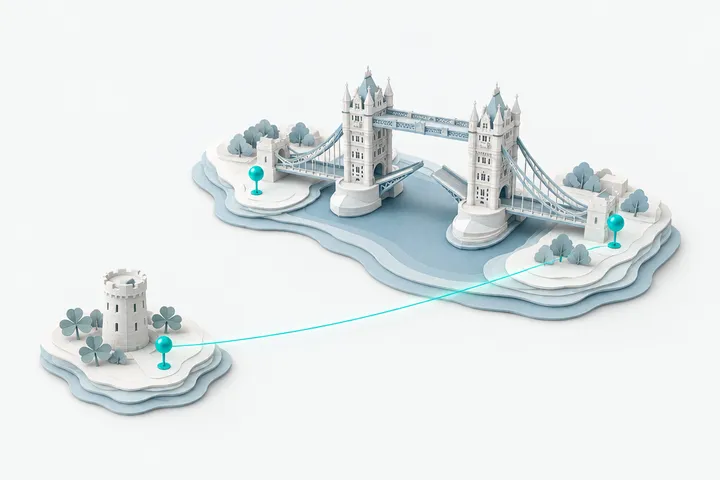
The UK is the most expensive large English-language market for earned links and one of the dearest for paid ones. A sponsored article on an established UK site has a median list price of $1,040, while marketplace placements average about £120. Here is what the data shows and how the rules work.
Link building in the United States
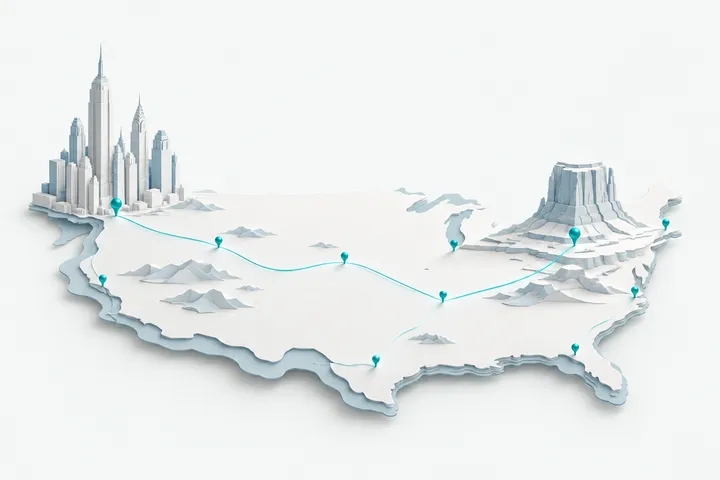
The US is the cheapest of the large English-language link markets. A sponsored article on an established US-audience site has a median list price of $452, less than half the UK figure. Supply is large, quality is uneven, and the FTC expects paid content to be labelled as advertising.
Link building in Germany, Austria and Switzerland
German-language links are among the most expensive in Europe. A sponsored article on an established German site has a median list price of $1,230, followed links are hard to get, and the German media authorities expect paid posts to be labelled "Werbung" or "Anzeige".

Link building in Spain
Spanish is a large and fairly cheap link market. Established Spanish-language publishers quote a median of $655 for a sponsored article, while the average order on the Publisuites marketplace costs under €100. Most cheap inventory is niche sites, and paid content must be identifiable as such.

Link building in Poland
Poland is a cheap and very SEO-literate link market. Established Polish publishers quote a median of $480 for a sponsored article, prices are negotiable, and a followed link can cost extra. Two of Europe's large link marketplaces started here.

Link building in the Nordics: Sweden, Norway, Finland and Denmark
The Nordics are the most expensive non-English link markets in the data. Swedish publishers quote a median of $1,440 for a sponsored article, pools are small, and all four consumer authorities require paid content to be clearly marked. Denmark's has applied that rule to link building by name.

Link building in Central and Eastern Europe and the Balkans
Central and Eastern Europe is the cheapest part of Europe for paid placements, with a regional median of $490 for a sponsored article. Prices range from $210 in Ukrainian to $1,040 in Slovak, and publisher habits differ sharply between the Czech and Slovak markets and the Balkans.

Link building in Greece
No price dataset exists for Greek links, so budgets are built from publisher price lists and direct quotes. Published examples range from €300 for a one-year guest post on a specialist site to media packages of €1,200 to €4,400 a month. The pool is small and gambling affiliates need a licence.

Link building in India
India is the cheapest link market in the data. Established English-language sites with an Indian audience quote a median of $100 for a sponsored article, and Hindi sites $70. Much of the supply is sold through reseller networks, so the main cost is checking what you are actually buying.
Checklists, templates and reference
Working documents and reference pages: checklists, request documents, case studies and statistics.
Off-page SEO checklist
An off-page SEO checklist should cover seven areas. These are your current link profile, the links you can claim for free, new link acquisition, brand mentions, local citations and reviews, visibility in AI answers, and monitoring. Work through them in that order.

Link building case studies: what public campaigns show
Yes, there are public link building case studies with numbers, but almost all are published by the agency that ran the campaign. This page lists seven with a named source, labels who published each, and explains how to read them.

How to write a reconsideration request after a link penalty
A reconsideration request for an unnatural links manual action must do three things that Google asks for. Explain the exact issue, describe the steps you took to fix it, and document the outcome. Write it only after the links are removed or disavowed.